

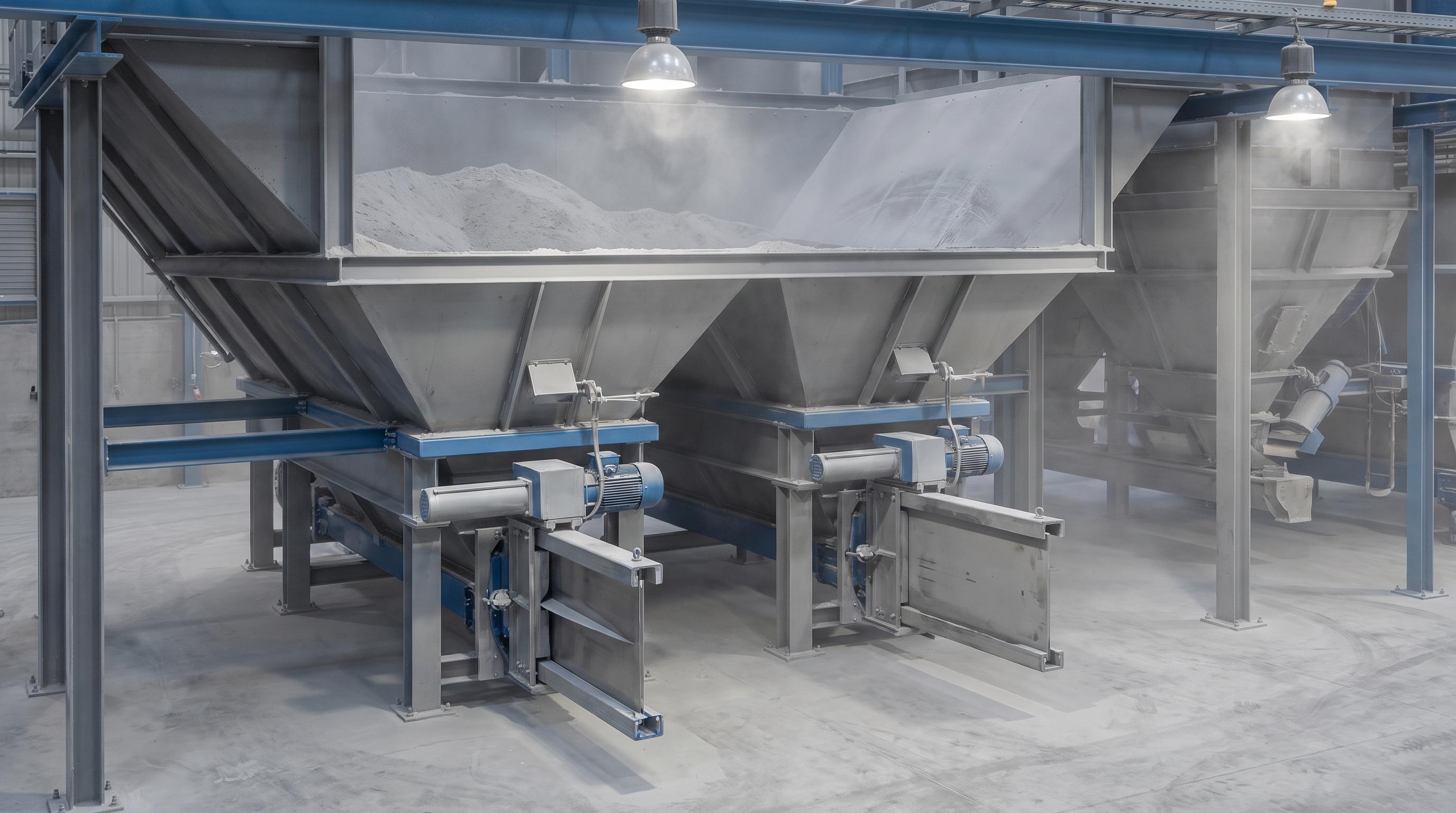
In abrasive dry-bulk service, the right choice comes down to the kind of shut-off the process actually needs. At hopper, bin, and chute outlets, a slide gate is usually the better fit for rugged isolation or throttling. When the job calls for a tighter shut-off, especially with fine powders that can pack an opening, a knife gate is usually the better choice.
Choose a slide gate for rugged gravity-outlet isolation or throttling with heavy, abrasive, or lumpy dry bulk. Choose a knife gate when the duty needs a cleaner dust-tight or gas-tight shut-off, especially with fine powders or conveyed material that can pack and leak.
The two gates solve different problems, and the mechanism shows why.
Slide gate: a heavy plate slides across a round or rectangular opening, driven by a handwheel, screw, or actuator. It isolates or throttles gravity-fed dry bulk at hopper, bin, and silo outlets, built around a rugged plate and frame.
Knife gate: a thin blade with a beveled edge slices through the material and seats against resilient or metal seats. The bonnetless design, covered for stainless valves by MSS SP-81, lets the blade close even when material is flowing in the opening, and it can seal tighter than a typical slide gate.
If you are shortlisting gate options for a live project, use this comparison to narrow the gate type first.
Factor | Slide gate | Knife gate |
|---|---|---|
Primary job | Isolate or throttle dry bulk at an outlet | Tight shut-off, including dust- or gas-tight |
Material fit | Heavy, lumpy, abrasive dry bulk | Fine powders, slurries, dry bulk needing a clean cut-off |
Sealing | Dust-tight achievable | Dust-tight; gas-tight with resilient seats |
Closing through flowing material | Can jam if fines pack the slide path | Blade slices through flowing material |
Throttling / flow control | Yes | Limited; mainly on-off |
Recognized standard | Application-specific; no single standard | MSS SP-81 for stainless knife gate valves |
Best in | Hopper, bin, and silo discharge; abrasive lump material | Isolation for pneumatic or combustible-dust lines; fine powder |
Download the spec sheet for the sealing, wear, actuation, and mounting details you need to size the right gate with confidence.
Sealing is where the two gates separate most, and the right level depends on what is downstream.
Dust-tight: stops visible powder leakage in normal operation. A well-sealed slide gate or a knife gate both reach this for most dry-bulk service.
Gas-tight: stops air or gas passage across the closed gate. This usually needs a knife gate with resilient seats, and it matters on pneumatic conveying lines, inerted silos, and any line where leakage would carry combustible dust.
No tight seal required: for simple isolation of coarse, lumpy material at a gravity outlet, a rugged slide gate is often all the duty needs.
Spec the sealing level to the service. A gas-tight knife gate on a coarse gravity outlet is wasted money; a basic slide gate where you need gas-tight isolation invites dust escape and a safety finding.
If the duty looks like this, a slide gate is usually the most relevant design to compare before you spec the outlet.
Heavy, lumpy, or very abrasive dry bulk such as clinker, limestone, or aggregate.
On-off isolation at a hopper, bin, or silo outlet under gravity flow.
Flow control or throttling, where you meter material by gate position.
Service where a rugged, serviceable plate and replaceable liners matter more than a tight seal.
Where the service needs a cleaner seal, this is the point in the decision where a knife gate becomes the more relevant design to evaluate.
A tight, dust- or gas-tight shut-off, not just isolation.
Isolation on pneumatic conveying or combustible-dust lines, where leakage is a safety issue.
Fine powders that would pack the slide path of a flat gate.
Service where you must close against flowing material, or where standardized MSS SP-81 procurement is required.
The wrong gate is not just a maintenance item. It shows up on the cost and safety side too.
Unplanned stops: a jammed slide gate, or a knife gate that will not seal, forces a line stop to clear or service it.
Dust and housekeeping: a gate that leaks fine powder adds cleanup labor and, with silica-bearing material, raises exposure in an area that is supposed to be controlled.
Lost or off-spec material: a gate that will not seal or throttle accurately wastes product and can upset downstream batching.
Repeat replacements: an un-hardened blade or plate in abrasive duty wears out fast, so the gate is back on the shutdown list every few cycles.
In abrasive dry bulk, wear is the main thing that ends a gate early. Frac sand is close to pure silica, and cement and fly ash are fine and aggressive.
Slide gates: specify a hardened or abrasion-resistant plate, replaceable wear liners, and a frame that keeps the plate aligned as it wears.
Knife gates: for abrasive service, standard stainless blades are upgraded to hardened alloys or tungsten-carbide coatings, with seats chosen for the material. MSS SP-81 covers the base design; abrasion resistance is an upgrade on top of it.
A rule of thumb: an un-hardened 304 or 316 blade can round off within months in silica sand or clinker, so specify hardened or carbide-faced blades, and chromium-carbide overlay plate on slide gates, from the start.
Dust matters here too. Frac sand and silica dust fall under OSHA respirable crystalline silica rules, so a gate that leaks dust adds to exposure and housekeeping. That alone can push a fine-powder service toward a tight knife-gate shut-off.
In one cement plant duty we supported, the gate body was serviceable but the blade specification was not. The standard blade lost its edge in abrasive fines, leakage started at the seal line, and the gate returned to the shutdown list much sooner than the team expected. Moving to a hardened blade and matching the seat material to the powder made the shut-off hold and pushed maintenance back into a planned window.
Manual handwheel or lever: lowest cost, fine for infrequent operation.
Pneumatic: fast on-off and automation for frequently cycled gates.
Electric or motorized with position feedback: best where you throttle flow or need batch-weighing accuracy.
A practical commissioning lesson: when a gate has to hit the same opening again and again for controlled feed, operators quickly feel the limits of manual actuation. We see this on batch and transfer points where a handwheel works for occasional isolation but not for repeatable positioning. In those cases, pneumatic or motorized actuation with position feedback usually saves more trouble than its upfront cost suggests.
Slide gate jamming and seizing usually starts when fines pack the slide path until the gate drags, seizes, or stops sealing properly. In most cases, the real fix is better sealing, scraping, plate, and frame design rather than forcing the gate harder.
Knife gate seat wear and leakage show up early when the seat material does not match an abrasive or fine-powder duty. If the shut-off starts leaking sooner than expected, the problem is usually in the seat selection, not just the gate itself.
Blade wear is another common failure point in abrasive service. An unhardened blade rounds off, loses its edge, and eventually stops sealing, which is why hardened or tungsten-carbide blades are usually the safer specification from the start.
This is a common pattern in abrasive dry-bulk service. It shows why gate type, not just gate size, is the real decision.
Step | What happened |
|---|---|
Plant and equipment | A US frac sand plant; a flat slide gate at a surge bin outlet feeding a transfer. |
Symptom | The gate cycled hard, leaked sand dust at the blade, and sometimes would not seal because sand packed the slide path. |
What was found | Fine, dry, near-pure silica packing the slide channel, worn seals, and dust escaping past the blade. |
Root cause | A flat slide gate used where a clean, dust-controlled shut-off was needed in a fine abrasive powder. |
Corrective action | Replaced it with a knife gate sized for the bin, with a hardened blade and resilient seats for a clean cut-off and dust-tight seal. |
Result | Clean shut-off restored, sand dust at the gate eliminated, and the silica housekeeping and exposure concern at that point reduced. |
The lesson: the slide gate was rugged enough, but it was the wrong type for a fine, abrasive, dust-controlled shut-off. Matching the gate to the duty fixed it.
Before you move into final sizing and procurement, keep the checks below together so the gate type, sealing level, wear package, and actuation all match the duty.
Material, particle size, and abrasiveness, for example fine frac sand versus lumpy clinker.
Shut-off requirement: isolation only, dust-tight, or gas-tight.
On-off versus throttling, and how accurately you need to meter flow.
Opening size, mounting, and the gravity or pressure conditions at the outlet.
Operating temperature and any moisture in the material.
Cycle frequency, which drives manual, pneumatic, or motorized actuation.
Blade, seat, and plate material for the abrasion and sealing the duty demands.
Maintenance access for blade, seat, and seal replacement.
The right gate choice usually comes from working through the service conditions before anyone focuses on size, price, or lead time.
Confirm whether the duty needs rugged gravity-outlet isolation, throttling, or a tighter dust- or gas-controlled shut-off.
Match blade, seat, plate, and liner materials to the abrasion level, sealing requirement, and expected maintenance interval.
Choose manual, pneumatic, or motorized actuation based on cycle frequency, repeatability, and control needs.
Check service access and wear points early so maintenance can be done during planned outages, not after the gate starts leaking or seizing.
In practice, better results usually come from matching the gate type and wear components to the material and operating conditions up front, especially in cement and frac sand service.
A slide gate is a rugged plate that slides across an outlet to isolate or throttle dry bulk, and it suits heavy, lumpy, abrasive material. A knife gate uses a thin, beveled blade that cuts through the material for a tighter shut-off, including dust-tight and, with resilient seats, gas-tight. In short: slide gate for rugged on-off and throttling, knife gate for a clean, tight shut-off.
Both can work, but the deciding factor is the shut-off you need. For a tight, dust-controlled cut-off in fine sand, a knife gate with a hardened or tungsten-carbide blade usually wins. For rugged isolation or throttling of coarse, lumpy material, a slide gate with a hardened plate and replaceable liners is often the better fit. Either way, specify abrasion-resistant blade or plate material.
A slide gate can throttle by partially opening, which makes it useful for flow control at a hopper or bin outlet. A knife gate is mainly an on-off device; throttling a knife gate in abrasive service wears the blade and seats quickly.
Most slide gate jamming comes from fines packing the slide path, worn seals, or a frame that lets the plate go out of alignment as it wears. The fix is in the sealing, scraping, plate, and frame design, not in forcing the gate. Cranking a jammed gate harder usually accelerates the wear.
Use a knife gate. Those lines need a tight, dust- or gas-tight shut-off, and a knife gate with the right seats provides that. A flat slide gate is harder to keep tight on fine, conveyed material and can leak dust into an area covered by your combustible-dust program.
It depends on the material and the blade or plate specification. An un-hardened blade in silica sand or clinker can round off within months, while a hardened or carbide-faced blade with the right seats can run for years on the same duty. Service life is set at the spec stage, not after the gate is installed, so match the blade, seat, and plate material to the abrasion from the start.

Delivering advanced conveyor solutions from Houston across the U.S.


