



Problème et solution

Conveyor Belt Slippage — Causes, Solutions & Best Practices

Conveyor belt slippage occurs when the drive pulley fails to maintain adequate traction with the belt surface, resulting in speed loss, material carry-back, and unplanned shutdowns. Left unchecked, slippage accelerates belt wear, damages pulley lagging, and can reduce throughput by 15–30% in cement and steel plants. UGES engineered pulley and tensioning solutions eliminate slippage at the source, restoring rated conveyor capacity.
hero image 1

Plébiscité par les plus grandes marques

Logo
Logo
Logo
Logo
Logo
Logo
Logo

Comprendre Conveyor Belt Slippage

Belt slippage is one of the most common conveyor failures across bulk material handling operations in cement, steel, and power plants. It manifests as a measurable difference between drive pulley surface speed and actual belt speed, often exceeding 3–5% before operators notice. The downstream effects include reduced material throughput, excessive belt and pulley wear, heat build-up at the drive interface, and in severe cases, belt fires. Industry data suggests that slippage-related failures account for 12–18% of unplanned conveyor downtime, costing Indian cement plants an estimated INR 2–5 lakhs per incident in lost production and emergency maintenance.
icon
Description du problème
Belt slippage is one of the most common conveyor failures across bulk material handling operations in cement, steel, and power plants. It manifests as a measurable difference between drive pulley surface speed and actual belt speed, often exceeding 3–5% before operators notice. The downstream effects include reduced material throughput, excessive belt and pulley wear, heat build-up at the drive interface, and in severe cases, belt fires. Industry data suggests that slippage-related failures account for 12–18% of unplanned conveyor downtime, costing Indian cement plants an estimated INR 2–5 lakhs per incident in lost production and emergency maintenance.
icon
Coût de l’inaction
Persistent belt slippage leads to progressive lagging destruction, premature belt replacement cycles reduced from 5 years to under 3 years, and escalating energy consumption as drives compensate for lost traction. Safety risks include heat-induced belt fires and unexpected belt run-back on inclined conveyors, both of which have caused serious incidents in Indian plants.
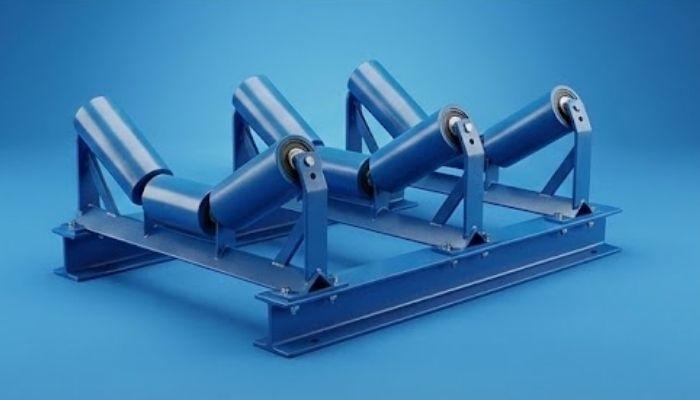
Product specification image

Causes profondes

Cause profonde 1

Insufficient Belt Tension

When gravity or screw take-up systems are improperly adjusted or counterweight travel is exhausted, the belt loses the wrap-angle pressure needed for traction on the drive pulley. This is especially prevalent after belt splicing or during seasonal temperature variations that cause belt elongation.
Cause profonde 2

Pulley Lagging Wear or Failure

Rubber or ceramic lagging on drive pulleys degrades over time due to abrasive material carry-back, moisture ingress, and mechanical fatigue. Once the lagging surface loses its friction coefficient — typically dropping below 0.35 for rubber lagging — the pulley can no longer grip the belt under full load conditions.
Cause profonde 3

Material Build-Up on Pulley Face

Wet or sticky material carry-back accumulates on the pulley surface, creating an uneven interface that reduces effective contact area. In cement plants handling clinker or raw meal with moisture content above 6%, build-up can form within hours, causing intermittent slippage that is difficult to diagnose visually.

Solutions d'ingénierie

UGES Drive Pulleys with Diamond Lagging

Drive Pulleys with Diamond Lagging

UGES drive pulleys feature hot-vulcanised diamond-groove rubber lagging that channels moisture and fine material away from the contact zone, maintaining a friction coefficient above 0.40 even in wet conditions. The diamond pattern provides bi-directional traction, making them suitable for reversible conveyor applications.
UGES Ceramic Pulley Lagging Kits

Ceramic Lagging Systems

For high-tension, high-abrasion applications such as long-distance overland conveyors or steep incline belts, UGES ceramic lagging tiles embedded in a rubber matrix deliver friction coefficients exceeding 0.45 and a service life 3–4x longer than standard rubber lagging. The alumina ceramic tiles resist abrasive wear while the rubber matrix absorbs impact loads.
UGES Gravity Take-Up and Screw Take-Up Assemblies

Automatic Belt Tensioning Solutions

UGES gravity take-up systems and screw take-up assemblies maintain optimal belt tension throughout the conveyor's operating cycle, automatically compensating for belt stretch, splice creep, and thermal expansion. Properly engineered tensioning eliminates the single largest root cause of belt slippage in Indian bulk handling plants.
Avis clients

Témoignages de réussite client

cover
icon

Nous nous approvisionnons en composants de convoyeurs auprès de United Global Engineering Solutions depuis un bon moment déjà. Leurs accessoires pour bandes transporteuses, notamment les rouleaux et poulies de convoyeur industriels, ont toujours répondu à nos exigences de qualité et de performance. Nous les recommandons vivement pour tous vos besoins en systèmes de convoyage.
Mathieu Bernard

Le client fidèle

cover
icon

Nous avons travaillé avec United Global Engineering Solutions pour nos besoins en convoyeurs, et l’expérience a été excellente du début à la fin. Leur équipe a rapidement compris nos exigences, nous a recommandé la solution de convoyage adaptée à nos opérations et a livré des bandes transporteuses industrielles de qualité qui ont réellement fait la différence. Depuis l’installation, notre flux de travail s’est amélioré et les opérations quotidiennes nous paraissent bien plus efficaces. Nous leur sommes reconnaissants pour leur soutien et les recommandons sans hésiter.
Julien Moreau

Le client satisfait

cover
icon

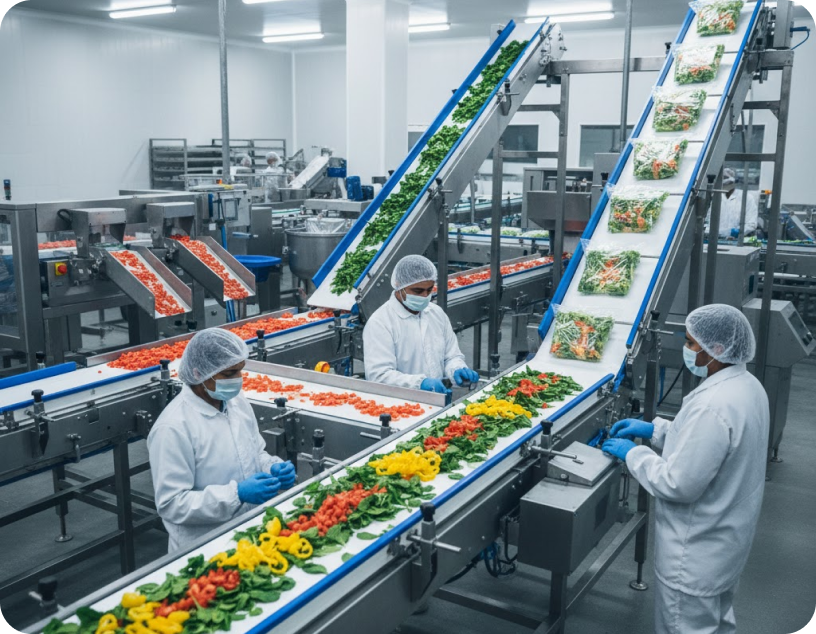
Nous avons travaillé avec United Global sur plusieurs projets, et leurs bandes transporteuses pour l’industrie agroalimentaire ont fait une réelle différence. Ce qui se démarque le plus, c’est leur capacité à personnaliser les solutions selon nos besoins et à livrer des produits de qualité dans les délais. Leur service réactif et leur approche rentable en font un partenaire sur lequel nous pouvons compter.
Nicolas Laurent

Le partenaire de confiance

cover
icon

Nous avons travaillé avec United Global Engineering Solutions sur plusieurs projets, et ils ont toujours répondu présents. Leurs bandes transporteuses pour l’industrie agroalimentaire ont véritablement changé les choses pour nous, et nous avons apprécié leur capacité à adapter les solutions à nos besoins spécifiques. L’équipe est réactive, le service est rapide et les solutions sont économiques sans compromettre la qualité.

Antoine Dubois

Le fabricant satisfait

15+

Secteurs desservis

10+

Années d'expérience

500+

Systèmes installés

600+

Clients satisfaits

Résolvez Conveyor Belt Slippage avec UGES

Nos experts se rendent sur votre site, comprennent votre flux de travail et recommandent la configuration exacte dont votre système a besoin.

UGESL LOGO

Des solutions de manutention de matériaux en vrac, depuis Paris et dans toute la France.


iconiconicon

Liens utiles

À propos de nous

Produits

Services

Secteurs

Nos produits

Rouleaux de convoyeur

Poulies de convoyeur

Vannes rotatives étanches à l’air

Convoyeurs à vis

Vanne de dérivation

Vanne coulissante

Chutes de transfert

Système de convoyeur à bande

Ensemble de glissière à air

Vanne rotative d’arrêt

Vanne de régulation du débit

Vannes papillon & à guillotine

Clapets

Tubes plongeurs

Écrivez-nous à :

icon

 info@ugesl.com

Copyright ©2026 United Global Engineering Solutions Pvt.Ltd. All Rights Reserved

Conveyor Belt Manufacturing Website by The Internet Folks

UGESL LOGO
À propos
les services
Blogue
Événements